

Allergen Information
Contains: Gluten
Nutrition per 100g
Grains & Cereal › Flour and Cereals
Barley Flour for Gestational Diabetes
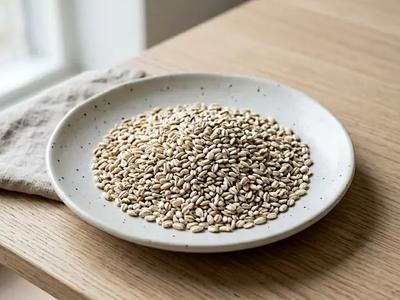
Barley flour is a non-wheat flour made from grinding whole barley grains, prized for its slightly sweet, nutty flavor and robust nutritional profile. As a whole-grain flour, it contains the bran, germ, and endosperm, making it rich in fiber, particularly beta-glucans, as well as vitamins and minerals. It's often used in baking to add texture, flavor, and nutrients to goods like bread, muffins, and pancakes. Due to its lower gluten content compared to wheat flour, it typically produces denser, moister baked goods. This makes it a hearty alternative for those looking to diversify their grain intake.
At a glance
Pregnancy safety
SafeBlood sugar impact
mediumCarbs / 100 g
74.5gIs Barley Flour safe with gestational diabetes?
Barley flour can be a suitable choice for managing gestational diabetes due to its high fiber content, particularly the soluble fiber beta-glucan. This fiber helps slow down glucose absorption, promoting more stable blood sugar levels compared to refined flours. However, it is still a significant source of carbohydrates and must be consumed in carefully controlled portions. Its moderate glycemic index makes it a better option than white flour, but it is not a low-carbohydrate food. Therefore, mindful consumption and strategic meal planning are essential for its safe inclusion in your diet.
How does Barley Flour affect blood sugar during pregnancy?
The beta-glucans in barley flour form a gel-like substance in the digestive tract, which effectively slows the breakdown and absorption of carbohydrates. This leads to a more gradual increase in blood glucose post-meal. However, because it is a flour, its smaller particle size allows for faster digestion than whole barley groats, giving it a moderate glycemic impact. The way it is prepared matters; dense muffins made with barley flour will likely have a lower glycemic response than light, fluffy pancakes. Overconsumption will undoubtedly lead to a blood sugar spike, so portion size remains the most critical factor.
What is a safe portion of Barley Flour for gestational diabetes?
A safe portion of barley flour is typically about one-quarter of a cup, which is around 30 grams, used within a recipe. This would equate to one small muffin or a single medium-sized pancake. Visually, the final baked good should be no larger than the size of your palm. It is crucial to measure flour accurately when baking and to be aware of the total carbohydrate count per serving. Always test your blood sugar after trying a new food or portion size to understand your individual response.
How should I combine Barley Flour to manage blood sugar during pregnancy?
To mitigate blood sugar spikes, always pair foods made with barley flour with sources of protein and healthy fats. For instance, enjoy a small barley flour muffin with a serving of plain Greek yogurt or a handful of almonds. Adding ingredients like chia seeds, flaxseed, or psyllium husk directly into your baking mix can further increase the fiber and fat content, blunting the overall glycemic response. Avoid consuming barley flour products with sugary toppings like jam or syrup; opt for nut butter or a sugar-free alternative instead. This balanced approach is key to keeping blood sugar levels stable.
Last reviewed: August 31, 2026
Important Safety Information
Every pregnancy is different, and gestational diabetes is managed differently depending on your readings, your medication and how far along you are. The ratings and portions on this page are general information — not a diagnosis, a treatment plan or a medical device — and they cannot see your results.
- Low blood sugar:
- If you take insulin or diabetes medication, eating less carbohydrate than your team planned for can push your blood sugar too low. Treat a reading below 70 mg/dL (3.9 mmol/L), or symptoms such as shaking, sweating, confusion or a racing heart, with fast-acting carbohydrate immediately and retest after 15 minutes. Never use this page as a reason to skip or shrink a meal you were told to eat.
- Carbohydrate and ketones:
- Cutting carbohydrate hard to force a number down is not safe in pregnancy — it can produce ketones. Published guidance sets a minimum of 175 g of carbohydrate per day in pregnancy. Readings that stay above target for several days need your care team, not a smaller portion.
- Medication and insulin:
- The portions here are generic and know nothing about your insulin doses, your metformin, or the steroids given to mature your baby's lungs — all of which change how a meal affects you. Never adjust a dose or a mealtime based on this page.
- Food safety in pregnancy:
- Blood sugar is not the only thing that makes a food suitable while you are pregnant. Some foods with excellent glycemic numbers still carry mercury, vitamin A, listeria or alcohol risks, and those are judged separately from the ratings shown here. Check your national pregnancy food-safety guidance before adding an unfamiliar food.
- What these ratings can and cannot tell you:
- Glycemic index values, impact ratings and maximum servings are population averages taken from published tables. Two people eating the same food can get very different readings, so your own meter is the only measurement that describes you. Nutrition figures are indicative per 100 g and vary with brand, ripeness and preparation.
Contact your care team the same day if: your readings stay above target for several days; you have a reading below 54 mg/dL (3.0 mmol/L) or needed someone else's help to treat a low; you test positive for ketones; or your baby is moving less than usual. Seek emergency care for confusion, fainting, repeated vomiting, or a low you cannot bring back up.
By using this guide, you agree to our Terms and Conditions. How we write, source and review this content: editorial policy.
Sources & Editorial Review
Content independently developed by Dalo Labs ApS, informed by the American Diabetes Association's Standards of Care in Diabetes, ACOG's gestational diabetes guidelines, and the IADPSG consensus criteria. Not endorsed by or affiliated with any referenced organization. · Last reviewed: August 2026
- American Diabetes Association — Management of Diabetes in Pregnancy: Standards of Care in Diabetes—2026
- ACOG Practice Bulletin No. 190 — Gestational Diabetes Mellitus (reaffirmed 2026)
- USDA FoodData Central — Nutritional Database
- Atkinson et al. — International Tables of Glycemic Index and Glycemic Load Values 2021 (Am J Clin Nutr)
More in Flour and Cereals
Help with every meal, not just this one
SugarCurve plans your week, turns cravings into recipes and shows how your readings respond to what you eat, so following your care team's advice takes less guesswork, day after day.
- Weekly meal plans
- Recipes for your cravings
- Your numbers, in charts
- Reports for your care team
7 days free, then a subscription. Cancel anytime before the trial ends.