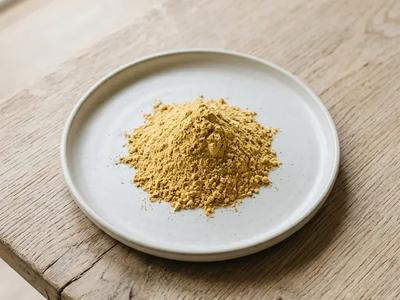
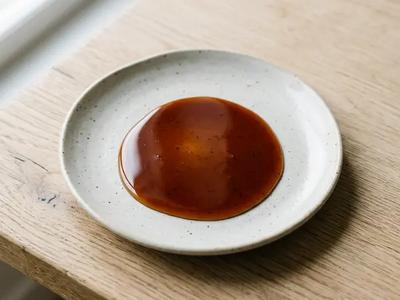
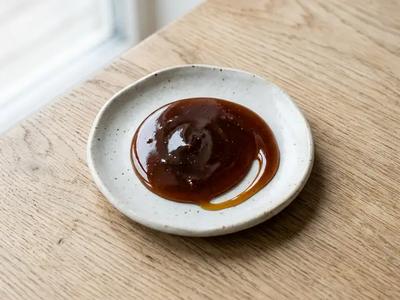
Food Library
Honey, syrups and coconut sugar are sugars: in this library they carry about 67 to 95 g of carbohydrate per 100 g, against about 100 g for white sugar by USDA's figures, whatever a word like 'natural' on the label suggests. The substitutes, stevia, monk fruit, erythritol, xylitol and allulose, sweeten with little or no sugar. This guide compares the sugars, then sets out what regulators say about the substitutes and the catch with sugar alcohols. None of the regulator pages cited here gives separate advice for pregnancy, and the guide says so where it matters. Natural sweeteners and sugar substitutes each have a page of their own, and every sweetener is listed further down.
See what works for you. Try SugarCurve free for 7 days
18 foodsLast reviewed: September 7, 2026Sources

No foods found for your search.
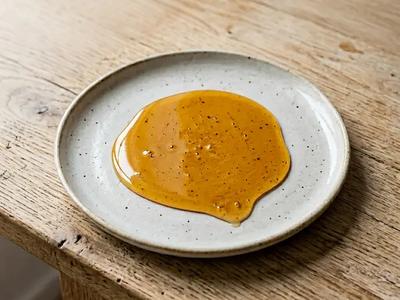
About 82 g of carbohydrate per 100 g, nearly all of it sugar.
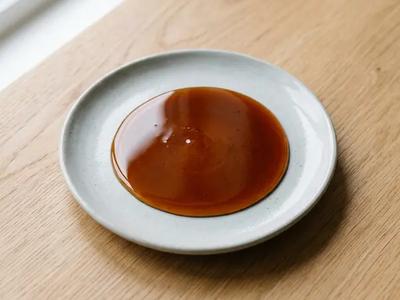
The lowest-carbohydrate syrup here, at about 67 g per 100 g.

A GI of 15, but 76 g of carbohydrate per 100 g, as much as the other syrups.
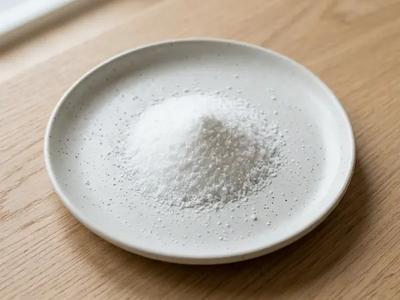
No carbohydrate or energy in this library's figures.

Counted as carbohydrate but not as sugar, with about 24 kcal per 100 g.

About 240 kcal per 100 g, ten times erythritol's; like other polyols, laxative in large amounts.
Three sugars that are often presented as alternatives to white sugar, and three substitutes whose figures differ from each other. There is no white sugar in this library yet, so USDA's figure stands in for it in the text.
The NHS counts the sugars in honey, in syrups such as maple, agave and golden syrup, and in nectars as free sugars, the same as sugar added to food, and says adults should have no more than 30 g of free sugars a day. By USDA's figures, honey carries about 82 g of carbohydrate per 100 g, agave syrup 76 g, maple syrup 67 g and white sugar 100 g.[1] [2]
Diabetes UK notes that GI takes no account of portion size, and that the amount of carbohydrate affects blood sugar more than GI does. Agave syrup shows the gap: it has a GI of 15 in this library but about 76 g of carbohydrate per 100 g, as much as the other syrups, and its low-impact label here comes from the GI alone. Diabetes UK's advice is written for diabetes generally, not for pregnancy.[3]
The NHS says all approved sweeteners are considered a safe and acceptable alternative to sugar, within an acceptable daily intake: the most considered safe to have every day over a lifetime. The FDA says the sweeteners it authorises are safe for the general population under certain conditions of use; certain purified stevia compounds and monk fruit extracts are generally recognised as safe there, but whole-leaf and crude stevia are not. EFSA is re-evaluating older sweeteners and has finished aspartame, erythritol, acesulfame K, neotame and sucralose. None of these pages gives separate advice for pregnancy.[4] [5] [6]
Erythritol, xylitol and sorbitol are polyols, also called sugar alcohols. Under the food-labelling rules used in the EU and the UK, polyols count towards the carbohydrate on the nutrition label, which is why sugar-free gum shows about 70 g of carbohydrate per 100 g in this library and no sugar. The NHS notes that polyols can have a laxative effect in large amounts, and foods with more than 10% added polyols must say 'excessive consumption may produce laxative effects'.[4] [7]
Under EU rules, 'sugar-free' means no more than 0.5 g of sugars per 100 g, and 'no added sugars' means nothing added for its sweetness, sugars or any other food used that way; a product with sugars of its own must also say 'contains naturally occurring sugars'. Neither claim covers polyols or total carbohydrate, so read the nutrition panel.[8]
| Food | Carbs | Sugars | Calories | Blood sugar impact |
|---|---|---|---|---|
| Honey | 82.4 g | 82.1 g | 304 kcal | high |
| Maple Syrup (pure, unsweetened) | 67 g | 60 g | 260 kcal | high |
| Agave Nectar | 76.4 g | 68 g | 310 kcal | low |
| Coconut Sugar | 95.2 g | 92.5 g | 386 kcal | medium |
| Date Syrup | 75 g | 68 g | 295 kcal | high |
| Molasses (unsulfured) | 74.7 g | 74.7 g | 290 kcal | high |
All carry about 67 to 95 g of carbohydrate per 100 g; maple syrup the least, coconut sugar the most.
| Food | Carbs | Sugars | Calories | Blood sugar impact |
|---|---|---|---|---|
| Stevia | 0 g | 0 g | 0 kcal | low |
| Monk Fruit Sweetener | 0 g | 0 g | 0 kcal | low |
| Erythritol | 100 g | 0 g | 24 kcal | low |
| Xylitol | 100 g | 0 g | 240 kcal | low |
| Allulose | 100 g | 0 g | 40 kcal | low |
Stevia and monk fruit carry nothing; the sugar alcohols and allulose count as carbohydrate but not as sugar, and xylitol carries the most energy.
Figures from each food's entry in this library. Open a food for its full profile and portion notes.
18 foods in this category, each rated for glycemic impact and blood sugar effect.
Track how sweeteners affects your blood sugar with the SugarCurve app — free to download.
Start Free Trial →By weight it carries a little less carbohydrate: about 82 g per 100 g against 100 g for white sugar, by USDA's figures. The NHS counts the sugar in honey as free sugar, the same as added sugar, towards the same 30 g a day for adults. Your dietitian or diabetes team can say how it fits your plan.[1] [2]
The NHS considers all approved sweeteners a safe alternative to sugar, and the FDA considers the ones it authorises safe for the general population under certain conditions of use; neither page gives separate advice for pregnancy. The NHS names one exception: aspartame isn't suitable for people with phenylketonuria (PKU). If you use sweeteners a lot, mention it to your midwife or doctor.[4] [5]
Steviol glycosides, the sweet compounds in stevia, are among the approved sweeteners the NHS names, and certain purified ones are generally recognised as safe in the US. The FDA does not accept whole stevia leaves or crude stevia extracts as sweeteners. Neither regulator gives stevia-specific advice for pregnancy.[4] [5]
It depends on where you live. The FDA has raised no objection to allulose in the US under certain intended conditions of use. In Great Britain it is a novel food, and an application to authorise it was still at the risk-assessment stage at the Food Standards Agency when this guide was written.[5] [9]
Every pregnancy is different, and gestational diabetes is managed differently depending on your readings, your medication and how far along you are. The ratings and portions on this page are general information — not a diagnosis, a treatment plan or a medical device — and they cannot see your results.
Contact your care team the same day if: your readings stay above target for several days; you have a reading below 54 mg/dL (3.0 mmol/L) or needed someone else's help to treat a low; you test positive for ketones; or your baby is moving less than usual. Seek emergency care for confusion, fainting, repeated vomiting, or a low you cannot bring back up.
By using this guide, you agree to our Terms and Conditions. How we write, source and review this content: editorial policy.
Compiled and reviewed by Dalo Labs ApS. Numbered references in the text point to the sources below. Not endorsed by or affiliated with any referenced organization. · Last reviewed: September 7, 2026
SugarCurve plans your week, turns cravings into recipes and shows how your readings respond to what you eat, so following your care team's advice takes less guesswork, day after day.
7 days free, then a subscription. Cancel anytime before the trial ends.