Sweeteners
The sugar in honey and syrups is free sugar, the same as sugar from the bag, and the NHS's limit for it is 30 g a day. This guide, which sits under the Sweeteners guide, takes the 13 natural sweeteners here and does the arithmetic at the spoon, because nobody eats 100 g of honey: a tablespoon of any syrup here is 13 to 17 g of carbohydrate, half the day's free sugar. It then sorts the 13 into what they are: syrups that are sugar in liquid form, coconut sugar, which is sugar in a jar, the two labelled low and why, fruit purée, the one that isn't a free sugar, and brown rice syrup, the only sweetener here with a pregnancy rule. It ends with the honey question.
See what works for you. Try SugarCurve free for 7 days
13 foodsLast reviewed: September 11, 2026Sources


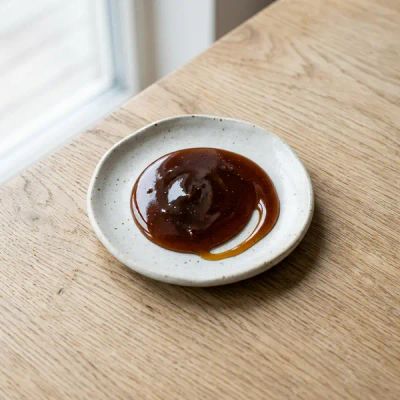
No foods found for your search.
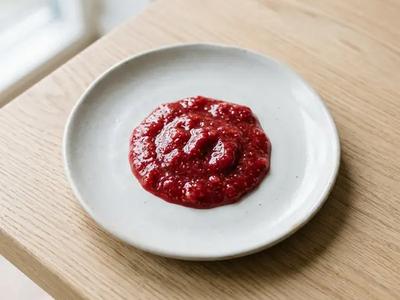
18 g of carbohydrate per 100 g, the lowest here by far, and not a free sugar by the NHS's definition.
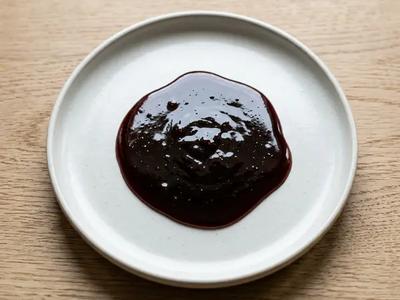
72.5 g of carbohydrate per 100 g, the least of the dark syrups; used by the teaspoon for sourness.
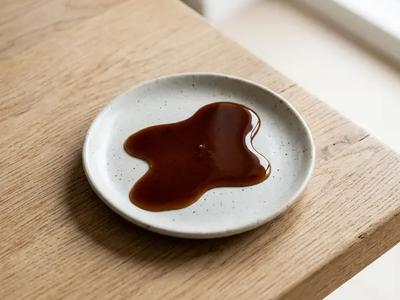
75 g of carbohydrate per 100 g, 68 g of it sugar; a tablespoon is about 15 g.
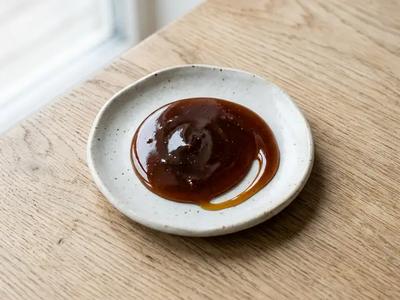
70 g of carbohydrate per 100 g, 50 g of it listed as fibre; the 23 g of sugar is still free sugar.
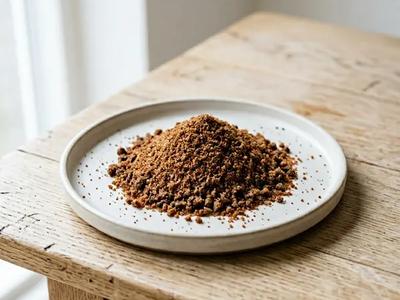
Here for what it is: 95 g of carbohydrate per 100 g, 92.5 g sugar, against 100 g for granulated sugar.
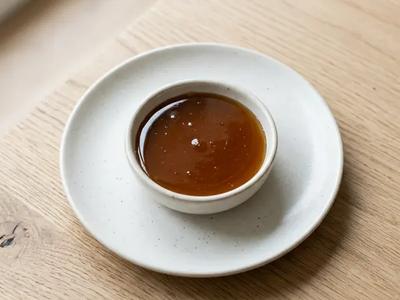
Here for its rule: limited for inorganic arsenic, with the highest GI in the library, 98.
The one sweetener that isn't a free sugar, the lightest dark syrup, and four featured for what they teach: date syrup, yacon, coconut sugar and brown rice syrup. Honey, maple and agave are featured in the Sweeteners guide.
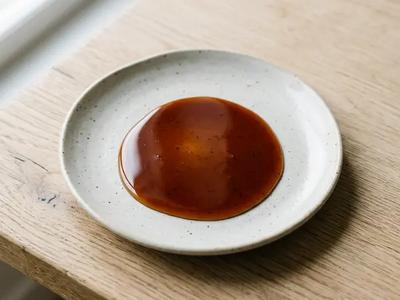
USDA weighs a tablespoon of honey at 21 g, of maple syrup and molasses at 20 g, of sorghum syrup at 21 g, and a teaspoon of agave at 6.9 g. At this library's figures, the tablespoon of honey is 17 g of carbohydrate, of molasses 15 g, of sorghum syrup 16 g, of maple syrup 13 g, and a teaspoon of agave 5 g. A teaspoon of granulated sugar is 4.2 g. Set against the NHS's 30 g of free sugar a day, one tablespoon of any syrup here is roughly half of it; a drizzle is a teaspoon, and a teaspoon of syrup is 4 to 6 g.[1] [2]
Coconut sugar carries 95 g of carbohydrate per 100 g here, 92.5 g of it sugar, against 100 g for USDA's granulated sugar. Its GI here is 54, medium, and Diabetes UK's caution applies: GI takes no account of portion size, and the amount of carbohydrate matters more. A teaspoon of coconut sugar is a teaspoon of sugar with a caramel taste and 5 % less carbohydrate. USDA lists maple sugar at 91 g.[1] [3]
Yacon syrup lists 70 g of carbohydrate per 100 g here, 50 g of it as fibre, with 23 g of sugar; lucuma powder 87 g, 26 g of it fibre, with 17 g of sugar. Both carry a low-impact label because most of their carbohydrate is listed as fibre and their GIs are 1 and 5. Read that as what the data says, not as a licence: the sugar that remains, 17 to 23 g per 100 g, is free sugar by the NHS's definition, and no agency page names either product.[2] [3]
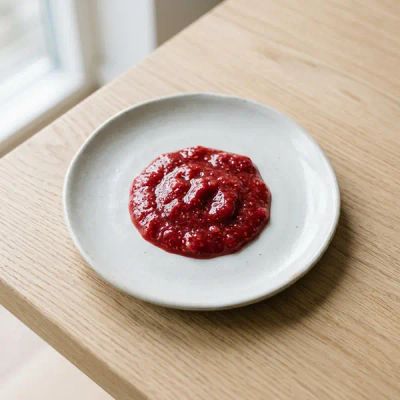
The NHS counts the sugars in honey, syrups, nectars, juices and smoothies as free sugars; sugar in whole fruit is not, and the NHS names neither purées nor mashed fruit. Fruit purée used as a sweetener carries 18 g of carbohydrate per 100 g here, 14 g of it sugar, with 2.5 g of fibre: a quarter of a syrup's carbohydrate, and the only entry in the group under 60 g. Mashed banana or apple purée in a bake is the sweetener that is still the fruit.[2]
Brown rice syrup is marked limit here for inorganic arsenic. Jackson and colleagues measured it in organic brown rice syrup, and EFSA's 2024 opinion treats a causal link between low to moderate inorganic arsenic exposure and reduced birth weight as established. The syrup carries brown rice's arsenic; nothing suggests the process concentrates it. Its GI here, 98, is the highest in the library.[4] [5]
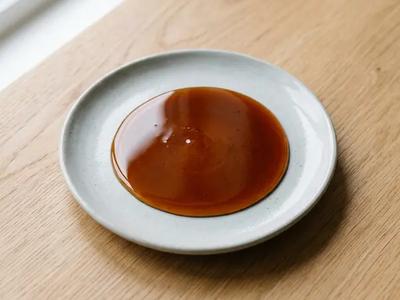
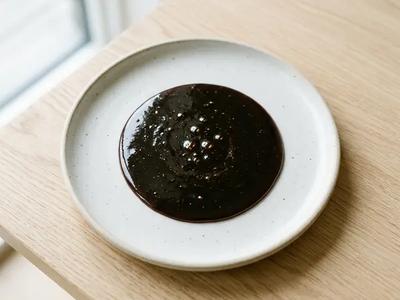
The dark syrups run from 72 g of carbohydrate per 100 g in pomegranate molasses to 78 g in barley malt syrup, with sugar from 55 g to 75 g; molasses is the only one where the whole 75 g is sugar. Molasses also carries the group's salt, 37 mg of sodium per 100 g, far under the NHS's 600 mg high threshold. A tablespoon of any of them is 14 to 16 g of carbohydrate.[1] [6]
| Food | Carbs | Sugars | Sodium | Blood sugar impact |
|---|---|---|---|---|
| Pomegranate Molasses | 72.5 g | 68 g | 8 mg | medium |
| Molasses (unsulfured) | 74.7 g | 74.7 g | 37 mg | high |
| Date Syrup | 75 g | 68 g | 6 mg | high |
| Sorghum Syrup | 75 g | 70 g | 6 mg | high |
| Brown Rice Syrup Caution | 77.4 g | 55.1 g | 14 mg | high |
| Barley Malt Syrup | 78 g | 55 g | 10 mg | high |
From 72 to 78 g of carbohydrate per 100 g; brown rice syrup carries the pregnancy badge.
| Food | Carbs | Sugars | Fiber | Blood sugar impact |
|---|---|---|---|---|
| Fruit Puree (as sweetener) | 18 g | 14 g | 2.5 g | medium |
| Yacon Syrup | 70 g | 23 g | 50 g | low |
| Agave Nectar | 76.4 g | 68 g | 0.2 g | low |
| Lucuma Powder | 87 g | 17 g | 26 g | low |
Fruit purée is low because it is mostly water; yacon and lucuma because most of their carbohydrate is listed as fibre; agave because of its GI alone.
| Food | Carbs | Sugars | Calories | Blood sugar impact |
|---|---|---|---|---|
| Maple Syrup (pure, unsweetened) | 67 g | 60 g | 260 kcal | high |
| Honey | 82.4 g | 82.1 g | 304 kcal | high |
| Coconut Sugar | 95.2 g | 92.5 g | 386 kcal | medium |
Maple syrup carries the least carbohydrate of the three per 100 g, coconut sugar the most; per spoon, all three are sugar.
Figures from each food's entry in this library. Open a food for its full profile and portion notes.
13 foods in this category, each rated for glycemic impact and blood sugar effect.
Track how natural sweeteners affects your blood sugar with the SugarCurve app — free to download.
Start Free Trial →The NHS's honey rule is about babies: don't give honey to a child under 1, because it can carry bacteria that cause infant botulism. The NHS's pregnancy foods-to-avoid page doesn't mention honey. What honey does carry is 82 g of carbohydrate per 100 g, all of it free sugar, so a 21 g tablespoon is 17 g, over half the NHS's 30 g a day.[2] [7]
Not by the figures: 95 g of carbohydrate per 100 g against 100 g, and 92.5 g of it sugar. Its GI here is 54, and Diabetes UK's point that the amount of carbohydrate matters more than GI applies. Count a teaspoon of it as a teaspoon of sugar.[1] [3]
Fruit purée, at 18 g per 100 g, because it is mostly water and fruit. Among the syrups, maple syrup carries the least at 67 g and a 20 g tablespoon is 13 g of carbohydrate; honey carries the most at 82 g. Yacon syrup's 70 g is mostly listed as fibre, which is why its page rates it low; its sugar is 23 g.[1]
Inorganic arsenic. Jackson and colleagues found it in organic brown rice syrup, and EFSA's 2024 opinion links low to moderate exposure in pregnancy to reduced birth weight. The syrup carries brown rice's arsenic rather than concentrating it, but it also has the library's highest GI, 98, so there is little reason to choose it.[4] [5]
Every pregnancy is different, and gestational diabetes is managed differently depending on your readings, your medication and how far along you are. The ratings and portions on this page are general information — not a diagnosis, a treatment plan or a medical device — and they cannot see your results.
Contact your care team the same day if: your readings stay above target for several days; you have a reading below 54 mg/dL (3.0 mmol/L) or needed someone else's help to treat a low; you test positive for ketones; or your baby is moving less than usual. Seek emergency care for confusion, fainting, repeated vomiting, or a low you cannot bring back up.
By using this guide, you agree to our Terms and Conditions. How we write, source and review this content: editorial policy.
Compiled and reviewed by Dalo Labs ApS. Numbered references in the text point to the sources below. Not endorsed by or affiliated with any referenced organization. · Last reviewed: September 11, 2026
SugarCurve plans your week, turns cravings into recipes and shows how your readings respond to what you eat, so following your care team's advice takes less guesswork, day after day.
7 days free, then a subscription. Cancel anytime before the trial ends.