Fruits & Vegetables
Dried fruit carries several times the carbohydrate of fresh fruit by weight, which is why the NHS counts 30 g of it as a portion; the Fruits & Vegetables guide explains why. This guide is about what to do with that: what a 30 g portion of each kind carries, which dried fruits have sugar added, what the label tells you about sulphites, and how stewing changes the numbers. Of the 41 dried fruits here, 29 are marked high impact and the only low ones are the peels, the rind, rose hip and coconut. Four carry a pregnancy caution: dried papaya, dried elderberries, goji berries and barberries. The evidence behind each is in the last section. Diabetes UK's fruit advice is written for diabetes in general, not pregnancy, and is named as such.
See what works for you. Try SugarCurve free for 7 days
41 foodsLast reviewed: August 31, 2026Sources



No foods found for your search.
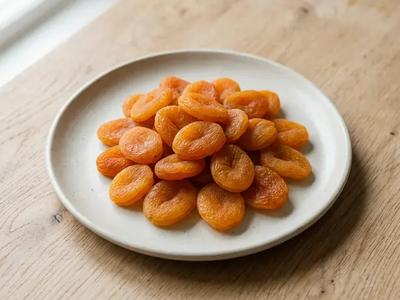
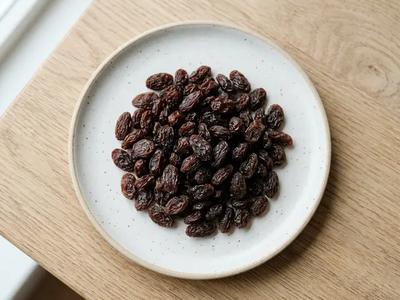
The lowest carbohydrate of the everyday dried fruits, 62.6 g per 100 g, so a 30 g portion is about 19 g.
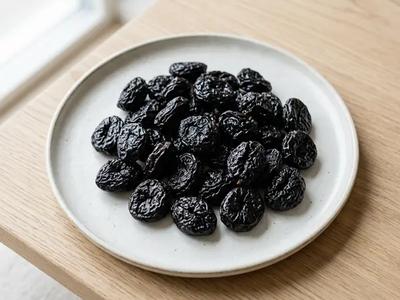
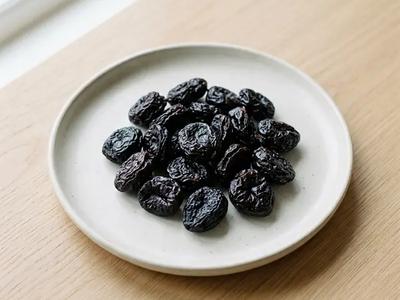
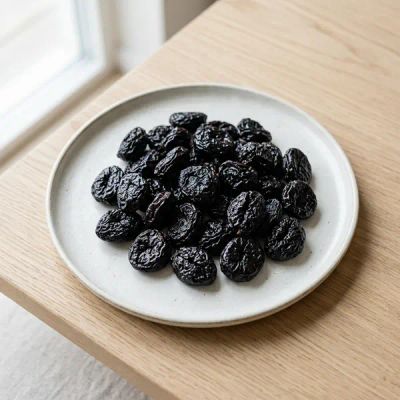
Three prunes make an NHS portion; about 19 g of carbohydrate in 30 g, with 2 g of fibre.
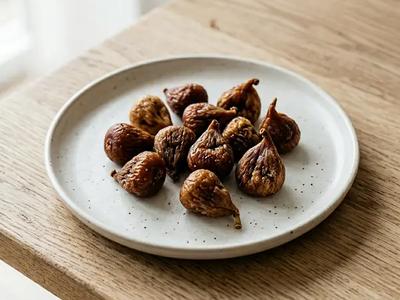
Two figs make a portion, and figs carry the most fibre of the everyday ones, 9.8 g per 100 g.
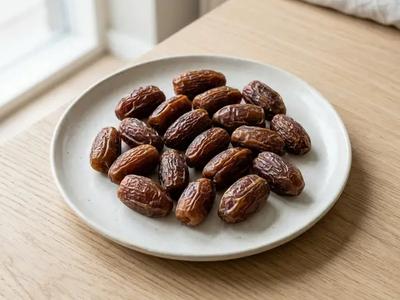
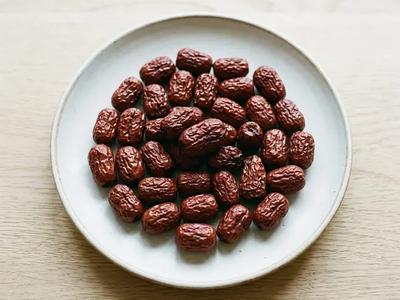
75 g of carbohydrate per 100 g; a 30 g portion is about 22 g, most of it sugar.
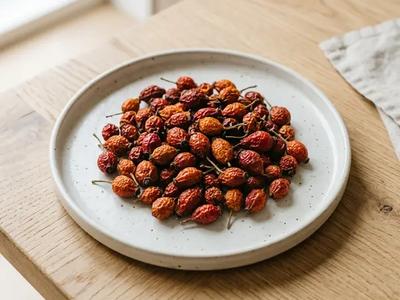
24 g of fibre and under 3 g of sugar per 100 g; the one dried fruit here that is mostly fibre.
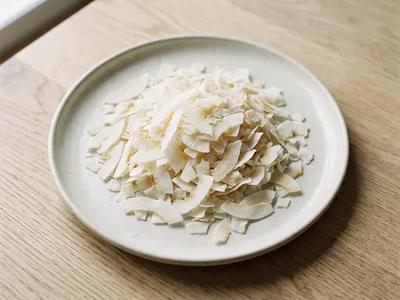
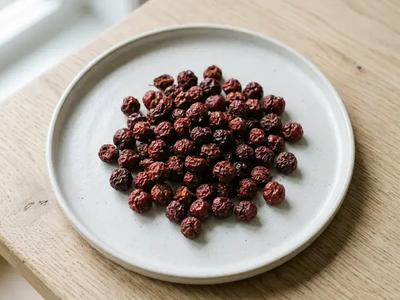
Here as the outlier: 660 kcal per 100 g from fat, with 7 g of sugar.
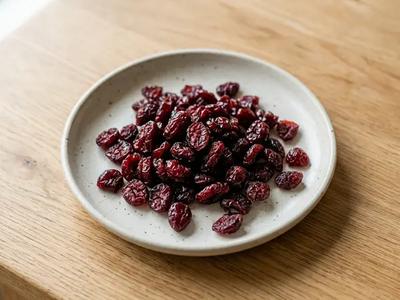
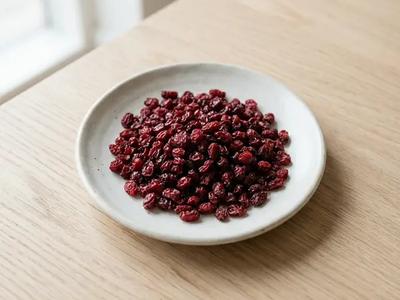
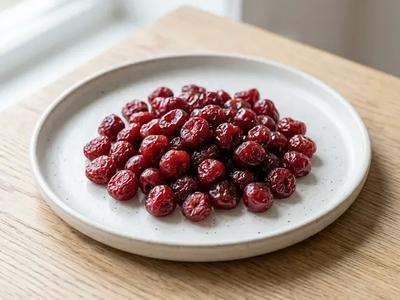
Here for the label: the figures match USDA's sweetened cranberries, at 65 g of sugar per 100 g.
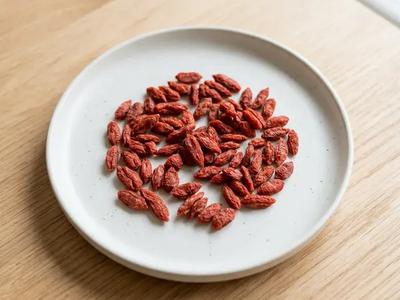
Here for its rule: cooking amounts only, and no goji juice, extracts or supplements in pregnancy.
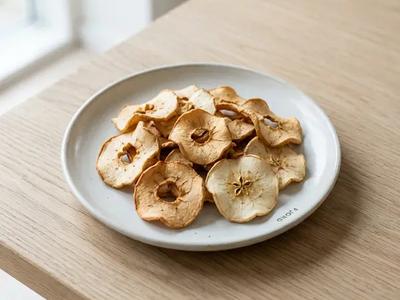
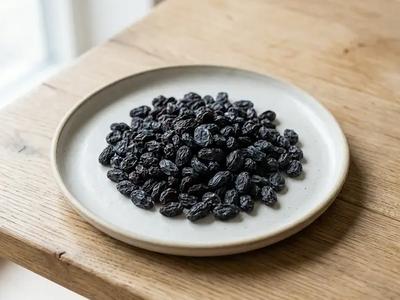
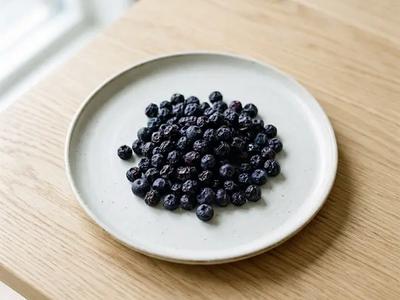
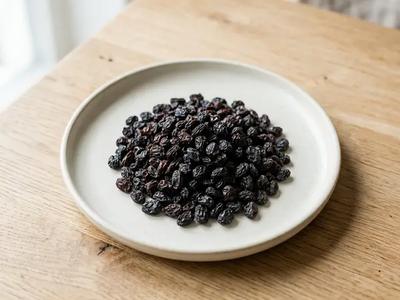
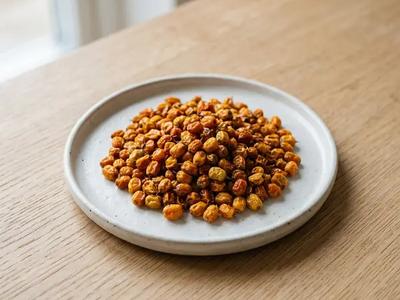
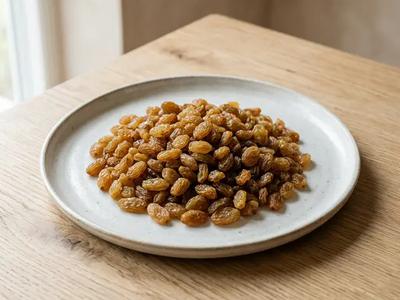
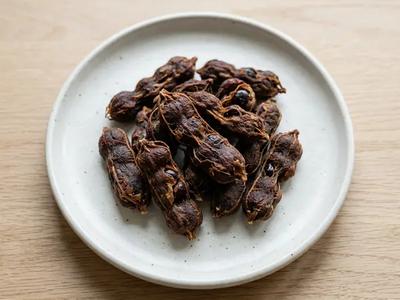
Four everyday dried fruits with their 30 g portions worked out, the fibre outlier, the fat outlier, sweetened cranberries for the label, and goji berries for their rule. The parent guide's fresh-and-dried table already shows raisins and dried apples beside their fresh fruit.
The NHS counts a portion of dried fruit as around 30 g: one heaped tablespoon of raisins, currants or sultanas, two figs, three prunes, or a handful of dried banana chips. In this library that portion carries about 24 g of carbohydrate for raisins, 22 g for dates, 19 g for apricots, figs or prunes, and 25 g for dried cranberries. Diabetes UK, for diabetes generally, suggests spreading fruit through the day.[1] [2]
Some dried fruit is sweetened before drying, and the label is the only way to tell. USDA's dried-cranberry entry is 'cranberries, dried, sweetened', at 82.8 g of carbohydrate and 72.6 g of sugars per 100 g; this library's dried cranberries match it. On a UK label, more than 22.5 g of total sugars per 100 g counts as high, which every dried fruit here exceeds apart from the peels, the rind, rose hip and coconut, so look for sugar in the ingredients list rather than at the sugars line.[3] [4]
USDA's entries for dried apricots, apples and peaches are the sulphured ones, and this library's figures match them. Sulphur dioxide and sulphites are one of the 14 regulated allergens in the UK, declared on the label above ten parts per million, so the ingredients list will say if a dried fruit has been treated with them.[3] [5] [6]
USDA lists dried apricots at 62.6 g of carbohydrate per 100 g uncooked and 22.2 g stewed without added sugar; dried figs go from 63.9 g to 27.6 g. The carbohydrate is the same, but a stewed portion weighs about three times as much, so it's back at fresh-fruit density. Stewed with sugar, USDA's apricots go up to 29.3 g. The NHS suggests eating dried fruit as part of a meal rather than as a between-meal snack, for the sake of your teeth.[3] [4]
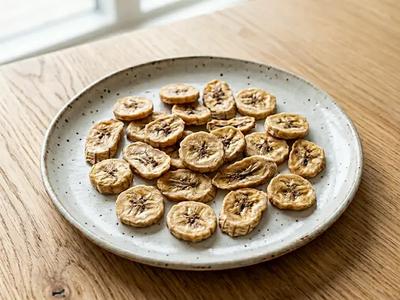
The dried bananas here list 88 g of carbohydrate and 1.8 g of fat per 100 g, which matches USDA's dehydrated banana. USDA's banana chips are a different food, at 58 g of carbohydrate but 33.6 g of fat and 519 kcal, because they are fried. The pack will say which one it is.[3]
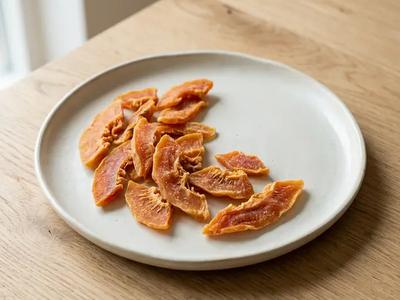
Dried papaya carries the same condition as fresh, ripe only, on the strength of one 2002 rat study and no agency advice. Dried elderberries must be cooked, by Oregon State University's food preservation guidance, because raw elderberries release cyanide during digestion. Goji berries and barberries are limited to cooking amounts, with their juices, extracts and supplements ruled out under the NHS's advice not to take herbal medicines in pregnancy; the tablespoon limit itself is this library's.[7] [8] [9]
| Food | Carbs | Sugars | Fiber | Blood sugar impact |
|---|---|---|---|---|
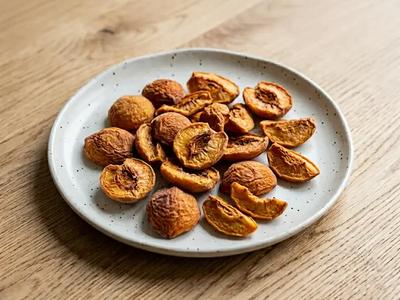
| Dried Apricots | 62.6 g | 53.4 g | 7.3 g | medium |
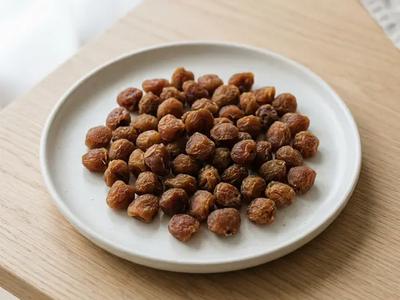
| Dried Prunes | 64 g | 38.1 g | 7.1 g | medium |
| Dried Figs | 63.9 g | 47.9 g | 9.8 g | high |
| Dried Dates | 75 g | 63.4 g | 8 g | high |
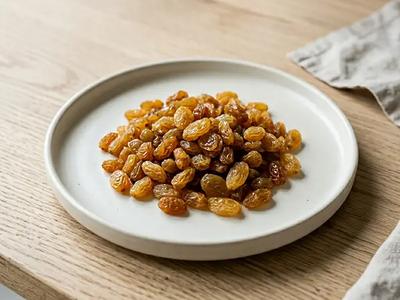
| Dried Raisins | 79.2 g | 59.2 g | 3.7 g | high |
| Dried Cranberries | 82.4 g | 65 g | 5.1 g | high |
From 62.6 g of carbohydrate per 100 g in apricots to 82.4 g in sweetened cranberries; figs carry the most fibre, 9.8 g.
| Food | Carbs | Sugars | Fiber | Blood sugar impact |
|---|---|---|---|---|
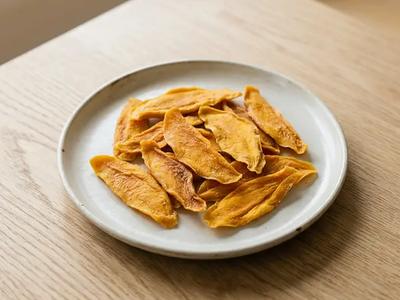
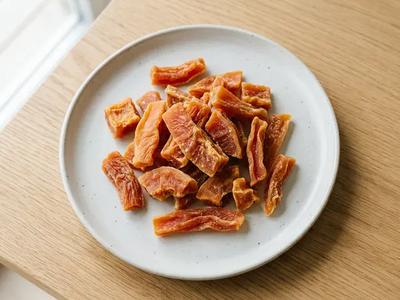
| Dried Mangoes | 78.6 g | 60.1 g | 8.3 g | high |
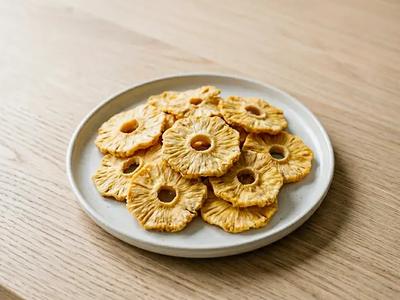
| Dried Pineapple | 83.1 g | 65.2 g | 7.5 g | high |
| Dried Bananas | 88.3 g | 47.4 g | 7.5 g | high |
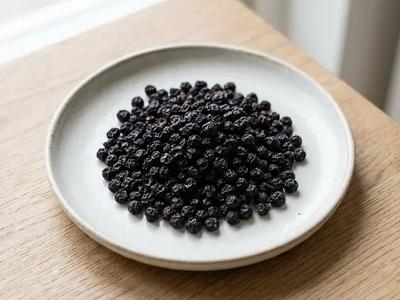
| Dried Blueberries | 75 g | 65 g | 7 g | high |
| Dried Cherries | 82 g | 64 g | 5 g | high |
| Dried Strawberries | 80.4 g | 68.5 g | 7.1 g | high |
All six sit between 75 and 88 g of carbohydrate per 100 g; cherries and strawberries are the most sugar.
| Food | Carbs | Fiber | Sugars | Blood sugar impact |
|---|---|---|---|---|
| Dried Rose Hip | 60.4 g | 24.1 g | 2.6 g | low |
| Dried Gooseberries | 80.5 g | 24.1 g | 48.2 g | high |
| Dried Acerola | 85 g | 22 g | 35 g | high |
| Dried Sea Buckthorn | 68 g | 20 g | 48 g | high |
| Dried Pomegranate Seeds | 81.6 g | 15.5 g | 65.1 g | high |
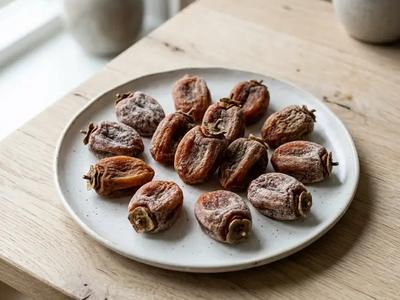
| Dried Persimmons | 73.4 g | 14.5 g | 48 g | high |
Rose hip and gooseberries carry 24 g of fibre per 100 g; rose hip has under 3 g of sugar.
| Food | Carbs | Fiber | Calories | Blood sugar impact |
|---|---|---|---|---|
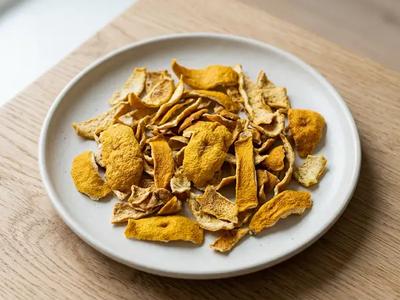
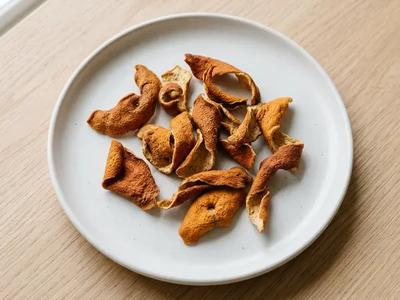
| Dried Orange Peel | 25 g | 10.6 g | 97 kcal | low |
| Dried Lemon Peel | 47.3 g | 10.6 g | 307 kcal | low |
| Dried Watermelon Rind | 50 g | 35 g | 250 kcal | low |
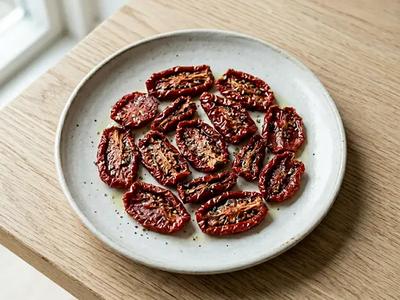
| Dried Tomato | 55.8 g | 12.3 g | 258 kcal | medium |
| Dried Coconut (dried flakes) | 23.7 g | 16.3 g | 660 kcal | low |
Dried coconut carries 660 kcal per 100 g, mostly fat; watermelon rind's 50 g of carbohydrate is 35 g fibre.
Figures from each food's entry in this library. Open a food for its full profile and portion notes.
41 foods in this category, each rated for glycemic impact and blood sugar effect.
Track how dried fruits affects your blood sugar with the SugarCurve app — free to download.
Start Free Trial →Diabetes UK, writing for diabetes in general, counts a portion of dried fruit as around 30 g and suggests spreading fruit through the day; it says it's unlikely you need to cut fruit down. In this library a 30 g portion of most dried fruit carries about 19 to 25 g of carbohydrate, so your dietitian can say how it fits your plan.[1] [2]
The NHS counts a portion of dried fruit as around 30 g. Dates here carry 75 g of carbohydrate per 100 g, so 30 g of dates carries about 22 g; weigh a couple to see what that is for the kind you buy. The NHS also suggests having dried fruit with a meal rather than as a snack between meals.[1] [4]
Usually. USDA's dried-cranberry entry is 'cranberries, dried, sweetened', and this library's figures match it at 65 g of sugar per 100 g. Look for sugar or juice concentrate in the ingredients list; unsweetened dried cranberries exist but are the exception.[3]
In cooking amounts, by this library's rule, about a tablespoon scattered through a dish. Goji juice, extracts and supplements fall under the NHS's advice not to take herbal medicines in pregnancy. The tablespoon limit is the library's own; no agency gives one.[9]
Every pregnancy is different, and gestational diabetes is managed differently depending on your readings, your medication and how far along you are. The ratings and portions on this page are general information — not a diagnosis, a treatment plan or a medical device — and they cannot see your results.
Contact your care team the same day if: your readings stay above target for several days; you have a reading below 54 mg/dL (3.0 mmol/L) or needed someone else's help to treat a low; you test positive for ketones; or your baby is moving less than usual. Seek emergency care for confusion, fainting, repeated vomiting, or a low you cannot bring back up.
By using this guide, you agree to our Terms and Conditions. How we write, source and review this content: editorial policy.
Compiled and reviewed by Dalo Labs ApS. Numbered references in the text point to the sources below. Not endorsed by or affiliated with any referenced organization. · Last reviewed: August 31, 2026
SugarCurve plans your week, turns cravings into recipes and shows how your readings respond to what you eat, so following your care team's advice takes less guesswork, day after day.
7 days free, then a subscription. Cancel anytime before the trial ends.