Fruits & Vegetables
Nine of the ten seaweed and algae foods here carry a pregnancy rule, which makes this the most cautioned group in the library, and the carbohydrate is beside the point. The rule is iodine, which seaweed carries in amounts that vary from sheet to sheet; the British Dietetic Association puts a pregnant woman's need at 200 µg a day and an adult's ceiling at 600 µg. Nori is the one seaweed here without a badge. The Fruits & Vegetables guide states the once-a-week rule in a paragraph. This guide takes the ten foods one by one: which are brown and which red, why hijiki is marked avoid for a different reason, what spirulina and chlorella are, how much salt a dried seaweed carries, and which figures are raw and which dried. Advice on seaweed differs between countries more than for any other group, and the guide says where.
See what works for you. Try SugarCurve free for 7 days
10 foodsLast reviewed: September 11, 2026Sources
No foods found for your search.
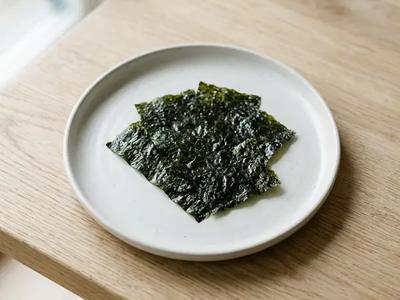
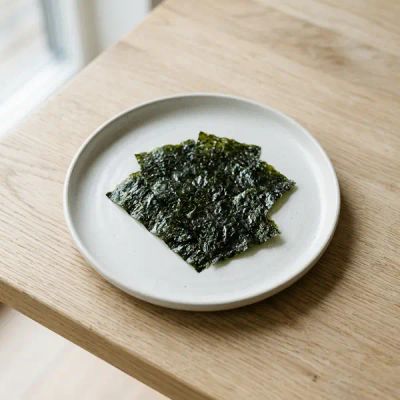
The one seaweed here with no pregnancy rule; the BDA says it may carry less iodine than kelp.
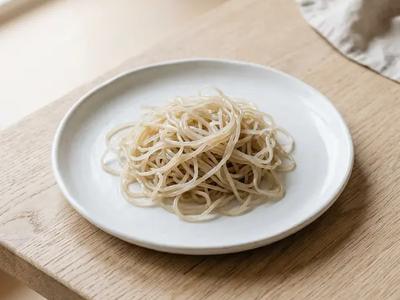
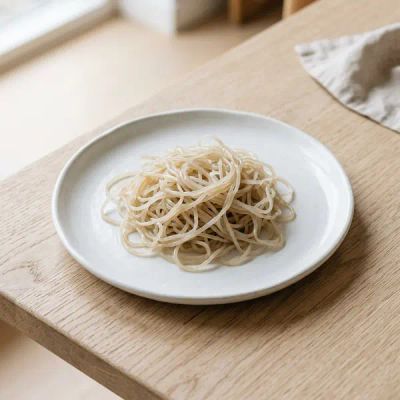
Here for its rule: 1.3 g of carbohydrate per 100 g, limited for iodine at a 200 g serving, the group's largest.
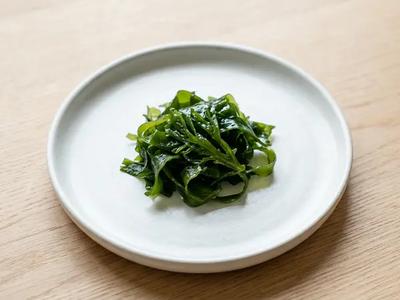
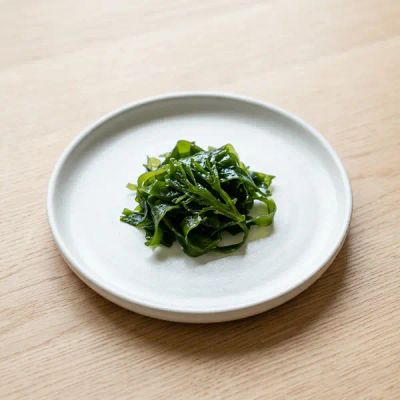
Here for its rule: a brown seaweed, so the once-a-week line applies; 872 mg of sodium per 100 g raw.
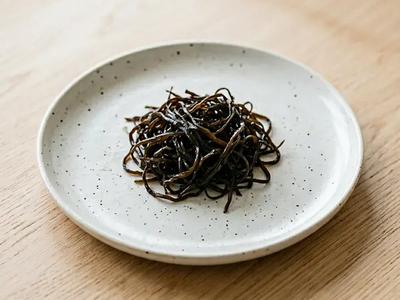
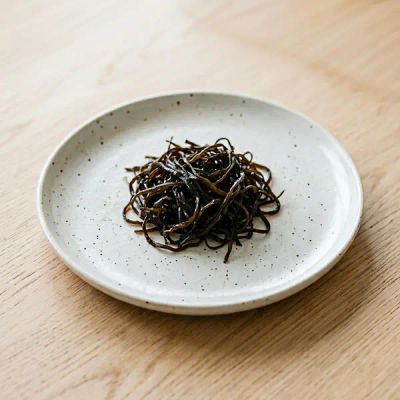
Here for its rule: the brown seaweed most confused with hijiki, carrying the iodine rule but not the arsenic one.
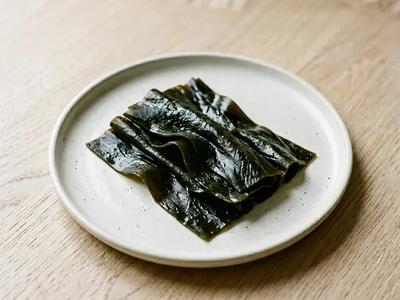
Here for its rule: the kelp used for dashi, limited to 15 g; the broth carries the iodine too.
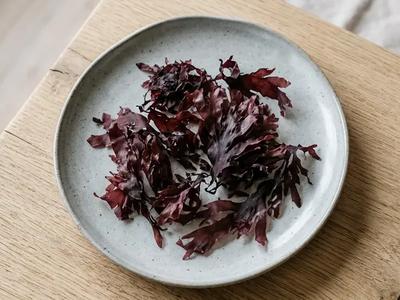
Here for its rule: a red seaweed limited at 10 g, because eaten as a vegetable its iodine adds up.
Nori, the only food here without a rule, and five seaweeds featured for what their rule is. Hijiki and spirulina are marked avoid and aren't featured; chlorella is a supplement and isn't either.
The British Dietetic Association's iodine fact sheet gives the figures the badges rest on: adults need 150 µg of iodine a day and pregnant and breastfeeding women 200 µg, and intake in adults should not exceed 600 µg. Brown seaweeds such as kelp have a very high and variable iodine content, so it advises not eating them more than once a week, especially in pregnancy, and says seaweed or kelp supplements should not be used as an iodine source. It calls seaweed an unreliable source of iodine for the same reason. The food pages here quote a 1,100 µg upper limit, which is the US figure; this guide uses the BDA's 600 µg.[1]
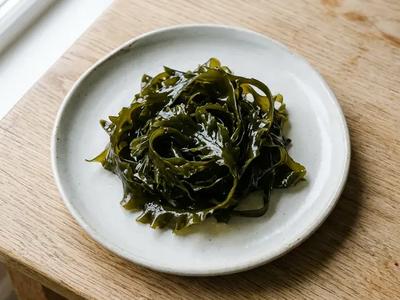
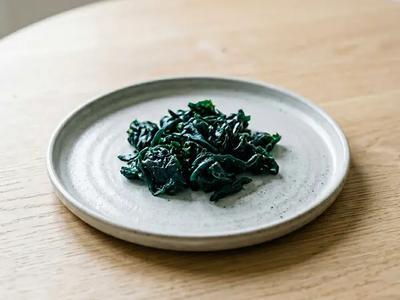
Kelp, kombu, wakame, arame and hijiki are brown seaweeds, and every one is marked limit or avoid here. Nori, the red seaweed pressed into sheets for sushi, is the exception: the BDA says it may have a lower iodine concentration than kelp, though the content varies considerably, and it is the one food in this group with no badge. Dulse is a red seaweed too, but its page limits it because eaten as a vegetable rather than a seasoning it carries enough iodine to matter. Kelp noodles are marked limit at a 200 g serving, the most generous in the group; their page says processing removes much of the iodine and that what is left varies by brand.[1]
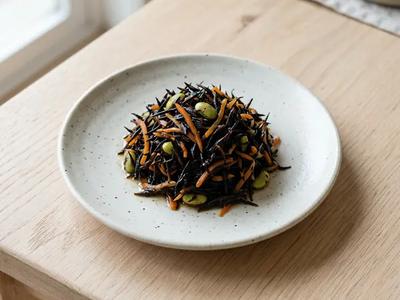
Hijiki is marked avoid for a reason the rest of the group doesn't share: it accumulates inorganic arsenic, and Canada's food inspection agency advises avoiding it altogether, for everyone, not only in pregnancy. Arame, the brown seaweed it is most often confused with, carries the ordinary iodine rule and nothing more; the two look alike dried, so read the packet.[2]
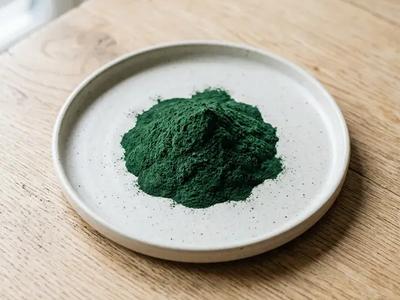
Spirulina, a blue-green alga, and chlorella, a green one, are sold dried as powders and tablets, and the pages here mark spirulina avoid and chlorella conditional: neither, they say, has established safety data in pregnancy, both are sold without a medicine's quality control, and spirulina batches have been found contaminated with microcystins and heavy metals. No agency page names either. The NHS's pregnancy supplements are folic acid and vitamin D, with a GP's advice for anything else. Their 57 to 58 g of protein per 100 g is per 100 g of powder; a 5 g scoop is 3 g.[3]
Dulse lists 1,847 mg of sodium per 100 g here, hijiki 1,400 mg, spirulina 1,048 mg and wakame 872 mg, all above the NHS's high-salt threshold of 600 mg per 100 g. The saving grace is the portion: seaweed is eaten in grams, so 10 g of dulse is about 185 mg of sodium, against the NHS's 6 g of salt a day, and nori's 48 mg per 100 g is nothing at all.[4] [5]
Kelp, kombu, wakame and nori are listed raw here, matching USDA's raw kelp, wakame and laver records at 5 to 10 g of carbohydrate per 100 g; dulse, hijiki, spirulina and chlorella are listed dried, at 17 to 56 g. Dulse shows six times kelp's carbohydrate because of the water, not the seaweed. Nori sheets are sold dried, so the raw figure here understates them; USDA's dried spirulina against its raw shows the scale, 23.9 g against 2.4 g.[6]
| Food | Carbs | Fiber | Sodium | Blood sugar impact |
|---|---|---|---|---|
| Kelp Caution | 9.6 g | 1.3 g | 233 mg | low |
| Kombu Caution | 9.6 g | 1.3 g | 233 mg | low |
| Wakame Caution | 9.1 g | 0.5 g | 872 mg | low |
| Arame Caution | 10.2 g | 8.1 g | 233 mg | low |
All raw, at 9 to 10 g of carbohydrate per 100 g; the badge on every row is the iodine rule. Wakame carries the salt.
| Food | Carbs | Protein | Sodium | Blood sugar impact |
|---|---|---|---|---|
| Chlorella Caution | 17.3 g | 58.4 g | 52 mg | low |
| Spirulina Avoid | 24 g | 57.5 g | 1,048 mg | low |
| Hijiki Avoid | 56 g | 10.5 g | 1,400 mg | low |
| Dulse Caution | 56.1 g | 21.5 g | 1,847 mg | low |
Dried powders and flakes; the two algae carry the protein, hijiki carries the arsenic rule, dulse the salt.
| Food | Carbs | Protein | Sodium | Blood sugar impact |
|---|---|---|---|---|
| Kelp Noodles Caution | 1.3 g | 0.3 g | 35 mg | low |
| Nori | 5.1 g | 5.8 g | 48 mg | low |
| Wakame Caution | 9.1 g | 3 g | 872 mg | low |
Kelp noodles carry almost nothing per 100 g; nori is the one row without a badge.
Figures from each food's entry in this library. Open a food for its full profile and portion notes.
10 foods in this category, each rated for glycemic impact and blood sugar effect.
Track how seaweed & algae affects your blood sugar with the SugarCurve app — free to download.
Start Free Trial →It is the one seaweed here without a pregnancy badge. The British Dietetic Association says nori may have a lower iodine concentration than kelp, while noting the content varies considerably, and it is red rather than brown, so the once-a-week rule doesn't name it. National advice differs; the Danish and French versions of this page follow their own agencies.[1]
The spirulina page here marks it avoid, saying it has no established safety data in pregnancy, is sold without a medicine's quality control, and has had batches found contaminated with microcystins and heavy metals. No agency page names it. The NHS's pregnancy supplements are folic acid and vitamin D; anything else is a question for your GP or midwife.[3]
No, by the BDA: seaweed or kelp supplements should not be used as an iodine source, and seaweed is not a reliable source because the amount varies so much. It advises eating brown seaweed such as kelp no more than once a week, especially in pregnancy. The BDA's figures are 200 µg a day in pregnancy and no more than 600 µg for an adult.[1]
Because of inorganic arsenic rather than iodine. Canada's food inspection agency advises avoiding hijiki altogether, and the advice is for everyone, not only pregnancy. The other brown seaweeds here carry the iodine rule, which is a limit, not an avoid.[2]
Every pregnancy is different, and gestational diabetes is managed differently depending on your readings, your medication and how far along you are. The ratings and portions on this page are general information — not a diagnosis, a treatment plan or a medical device — and they cannot see your results.
Contact your care team the same day if: your readings stay above target for several days; you have a reading below 54 mg/dL (3.0 mmol/L) or needed someone else's help to treat a low; you test positive for ketones; or your baby is moving less than usual. Seek emergency care for confusion, fainting, repeated vomiting, or a low you cannot bring back up.
By using this guide, you agree to our Terms and Conditions. How we write, source and review this content: editorial policy.
Compiled and reviewed by Dalo Labs ApS. Numbered references in the text point to the sources below. Not endorsed by or affiliated with any referenced organization. · Last reviewed: September 11, 2026
SugarCurve plans your week, turns cravings into recipes and shows how your readings respond to what you eat, so following your care team's advice takes less guesswork, day after day.
7 days free, then a subscription. Cancel anytime before the trial ends.