

Nutrition per 100g
Kaffir Lime Leaves for Gestational Diabetes
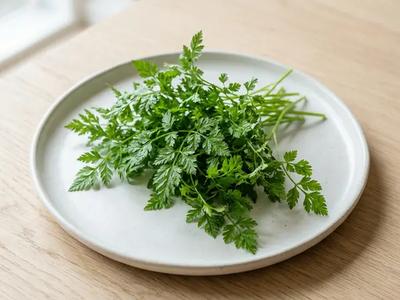
Kaffir lime leaves originate from Southeast Asia and are prized for their incredibly potent and distinct citrus fragrance. Characterized by their unique double-lobed, hourglass shape, these leaves are an aromatic herb rather than a vegetable to be eaten in volume. Their flavor comes from essential oils, primarily citronellal, which provides a bright, floral, and lime-like aroma. They are a cornerstone ingredient in Thai, Indonesian, and other Southeast Asian cuisines. The leaves are used to impart a complex flavor profile that is impossible to replicate with other citrus fruits.
At a glance
Pregnancy safety
SafeBlood sugar impact
lowCarbs / 100 g
12gIs Kaffir Lime Leaves safe with gestational diabetes?
Kaffir lime leaves are an outstanding choice for a gestational diabetes diet, providing a burst of flavor without any carbohydrates, sugar, or significant calories. This allows for the creation of delicious and satisfying meals without any risk to blood glucose control. Their powerful aroma can make simple preparations of lean proteins and non-starchy vegetables far more appealing, aiding dietary adherence. As they are used purely for flavoring and not consumed in quantity, they are considered a 'free' food. They are a safe and effective way to enhance your meals.
How does Kaffir Lime Leaves affect blood sugar during pregnancy?
The impact of kaffir lime leaves on blood sugar is effectively zero, making them exceptionally safe for gestational diabetes. They contain negligible carbohydrates and are used in such small quantities that they do not affect glycemic index or load calculations. Cooking methods, such as simmering in a curry or steeping in a broth, do not alter their non-existent glycemic impact. You can use them freely to flavor your food without any need for concern about blood sugar spikes. They are one of the safest herbs you can incorporate into your diet.
What is a safe portion of Kaffir Lime Leaves for gestational diabetes?
For gestational diabetes, there is no functional portion limit for kaffir lime leaves because they are not typically eaten. A common amount is one to three leaves to flavor an entire pot of food, and they are usually removed before serving. Since they are not consumed directly in any significant quantity, you do not need to measure or restrict their use for blood sugar management. Feel free to use them to taste to make your meals more enjoyable and varied.
How should I combine Kaffir Lime Leaves to manage blood sugar during pregnancy?
Use kaffir lime leaves to infuse flavor into lean proteins like chicken, fish, or tofu, avoiding the need for sugary marinades or sauces. They pair wonderfully with healthy fats like full-fat coconut milk in curries, which helps to slow the absorption of carbohydrates from other ingredients in the meal. Add whole leaves to broths for flavorful soups loaded with non-starchy vegetables and a protein source. This strategy helps you build a balanced, low-glycemic meal from a foundation of pure flavor, not sugar or starch.
Last reviewed: August 31, 2026
Important Safety Information
Every pregnancy is different, and gestational diabetes is managed differently depending on your readings, your medication and how far along you are. The ratings and portions on this page are general information — not a diagnosis, a treatment plan or a medical device — and they cannot see your results.
- Low blood sugar:
- If you take insulin or diabetes medication, eating less carbohydrate than your team planned for can push your blood sugar too low. Treat a reading below 70 mg/dL (3.9 mmol/L), or symptoms such as shaking, sweating, confusion or a racing heart, with fast-acting carbohydrate immediately and retest after 15 minutes. Never use this page as a reason to skip or shrink a meal you were told to eat.
- Carbohydrate and ketones:
- Cutting carbohydrate hard to force a number down is not safe in pregnancy — it can produce ketones. Published guidance sets a minimum of 175 g of carbohydrate per day in pregnancy. Readings that stay above target for several days need your care team, not a smaller portion.
- Medication and insulin:
- The portions here are generic and know nothing about your insulin doses, your metformin, or the steroids given to mature your baby's lungs — all of which change how a meal affects you. Never adjust a dose or a mealtime based on this page.
- Food safety in pregnancy:
- Blood sugar is not the only thing that makes a food suitable while you are pregnant. Some foods with excellent glycemic numbers still carry mercury, vitamin A, listeria or alcohol risks, and those are judged separately from the ratings shown here. Check your national pregnancy food-safety guidance before adding an unfamiliar food.
- What these ratings can and cannot tell you:
- Glycemic index values, impact ratings and maximum servings are population averages taken from published tables. Two people eating the same food can get very different readings, so your own meter is the only measurement that describes you. Nutrition figures are indicative per 100 g and vary with brand, ripeness and preparation.
Contact your care team the same day if: your readings stay above target for several days; you have a reading below 54 mg/dL (3.0 mmol/L) or needed someone else's help to treat a low; you test positive for ketones; or your baby is moving less than usual. Seek emergency care for confusion, fainting, repeated vomiting, or a low you cannot bring back up.
By using this guide, you agree to our Terms and Conditions. How we write, source and review this content: editorial policy.
Sources & Editorial Review
Content independently developed by Dalo Labs ApS, informed by the American Diabetes Association's Standards of Care in Diabetes, ACOG's gestational diabetes guidelines, and the IADPSG consensus criteria. Not endorsed by or affiliated with any referenced organization. · Last reviewed: August 2026
- American Diabetes Association — Management of Diabetes in Pregnancy: Standards of Care in Diabetes—2026
- ACOG Practice Bulletin No. 190 — Gestational Diabetes Mellitus (reaffirmed 2026)
- USDA FoodData Central — Nutritional Database
- Atkinson et al. — International Tables of Glycemic Index and Glycemic Load Values 2021 (Am J Clin Nutr)
Help with every meal, not just this one
SugarCurve plans your week, turns cravings into recipes and shows how your readings respond to what you eat, so following your care team's advice takes less guesswork, day after day.
- Weekly meal plans
- Recipes for your cravings
- Your numbers, in charts
- Reports for your care team
7 days free, then a subscription. Cancel anytime before the trial ends.