Dairy & Dairy Alternatives
Plain milk and yogurt count as carbohydrate, because every plain version carries lactose, the sugar found in milk. So the useful questions are how much, what has been added, and how much protein comes with it. The answers are not always what the front of the pack suggests: in this library, skimmed milk carries a little more carbohydrate per 100 g than whole, lactose-free milk carries as much as ordinary milk, and a yogurt drink carries more than twice what a pot of plain yogurt does. This guide compares the everyday options side by side, explains which label lines to read, and covers milk from other animals, which comes with its own pregnancy rule.
See what works for you. Try SugarCurve free for 7 days
38 foodsLast reviewed: August 19, 2026Sources




No foods found for your search.

About half the carbohydrate of regular milk, with more protein, in this library's entry.

Less fat and energy than whole milk, with slightly more carbohydrate per 100 g.
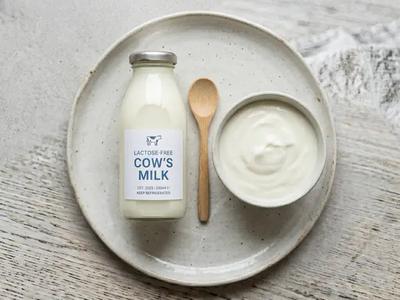
For lactose intolerance, not for less sugar: its carbohydrate matches ordinary milk's.

A low-fat cultured milk with milk-level carbohydrate and few calories.

A fermented milk with carbohydrate close to plain milk's.

Strained, so more protein and less carbohydrate than regular plain yogurt.

The most protein of the plain yogurts in this category.

A plain yogurt with about 10 g of protein and under 4 g of carbohydrate per 100 g.
The plain version of each format, because that's the figure to compare a flavoured product against; one example of each process that changes the numbers (filtering, straining, fermenting, removing lactose); and one milk from another animal, because its pregnancy rule differs.
USDA's reference values put whole milk at about 4.6 g of carbohydrate per 100 g and plain low-fat yogurt at about 7 g, more than plain whole-milk yogurt's 4.7 g. The same pattern shows in this library's milks, where skimmed carries slightly more than whole. Choosing a lower-fat milk or yogurt is a choice about fat and energy, not about carbohydrate.[1]
Lactose-free milk is for people who get symptoms from lactose, a sugar found in dairy; it isn't a lower-sugar milk. In this library its carbohydrate per 100 g matches ordinary milk's, so it counts the same way in a meal. Lactose-free yogurt, too, carries more carbohydrate than plain Greek yogurt.[2]
Strained yogurts such as Greek yogurt and skyr carry more protein per 100 g than regular yogurt: USDA puts plain whole-milk Greek yogurt at about 9 g against about 3.5 g for regular. Ultra-filtered milk does something similar for milk, with about half the carbohydrate and more protein in this library's entry. With the ADA's 2026 Standards setting a minimum of 71 g of protein a day in pregnancy, the protein line is worth reading alongside the carbohydrate.[1] [3]
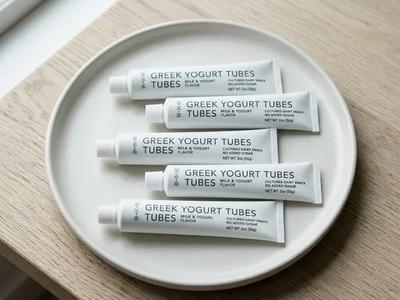
The same yogurt changes a lot with the format. In this library, Greek yogurt tubes carry almost four times the carbohydrate of a plain Greek yogurt pot, and 'low sugar' flavoured and fruit-on-the-bottom yogurts sit between the two. The NHS's label guide treats 5 g of total sugars or less per 100 g as low. Plain yogurt sits close to that from lactose alone, so a yogurt well above it has had sugar added, which a US label shows on its Added Sugars line.[4] [5]
The NHS lists pasteurised cows', sheep's and goats' milk, yoghurt and cream as fine in pregnancy, and advises against unpasteurised versions of all three because they may contain listeria. That's why the goat, sheep and other non-cow milks in this library carry a caution badge: the rule depends on processing, so check the label for 'pasteurised'.[6]
| Food | Carbs | Protein | Calories | Blood sugar impact |
|---|---|---|---|---|
| Whole Milk (Cow) | 4.7 g | 3.3 g | 61 kcal | low |
| Low-Fat Milk (Cow) | 5 g | 3.4 g | 42 kcal | low |
| Skim Milk (Cow) | 5 g | 3.4 g | 34 kcal | low |
| Lactose-free Cow's Milk | 4.8 g | 3.3 g | 61 kcal | low |
| Ultra-Filtered Milk | 2.5 g | 5.3 g | 61 kcal | low |
| Buttermilk | 4.8 g | 3.3 g | 40 kcal | low |
Fat level changes the energy, not the carbohydrate. Ultra-filtered milk is the outlier, with about half the carbohydrate of the others.
| Food | Carbs | Sugars | Protein | Blood sugar impact |
|---|---|---|---|---|
| Kefir (dairy-based) | 4.8 g | 4.8 g | 3.5 g | low |
| Filmjölk (Scandinavian cultured milk) | 4.5 g | 4.5 g | 3.5 g | low |
| Viili (Finnish fermented milk) | 4.5 g | 4.5 g | 3.5 g | low |
| Ayran (salted yogurt drink - low sodium version) | 3.5 g | 3.5 g | 2.5 g | low |
| Drinkable Yogurt (Dairy) | 12.5 g | 11.8 g | 3.1 g | medium |
| Lassi (sweet or salted, dairy-based) | 12 g | 11.5 g | 3.5 g | medium |
Plain fermented milks stay close to milk's carbohydrate; drinkable yogurt and lassi carry around two and a half times as much.
| Food | Carbs | Sugars | Protein | Blood sugar impact |
|---|---|---|---|---|
| Plain Greek Yogurt | 3.2 g | 3.2 g | 9 g | low |
| Greek Yogurt Tubes | 12 g | 10.5 g | 10.5 g | low |
| Yogurt with Added Probiotics | 3.9 g | 3.2 g | 10.1 g | low |
| Flavored Yogurt (Low Sugar) | 6 g | 4 g | 8 g | low |
| Fruit-on-the-bottom yogurt (low sugar) | 9 g | 6.5 g | 11 g | low |
| Dairy Yogurt Pouches | 8 g | 6 g | 10 g | low |
The plain pot is the baseline: tubes and pouches carry two to four times its carbohydrate, and 'low sugar' versions sit in between.
Figures from each food's entry in this library. Open a food for its full profile and portion notes.
38 foods in this category, each rated for glycemic impact and blood sugar effect.
Track how milk and yogurt affects your blood sugar with the SugarCurve app — free to download.
Start Free Trial →Not for carbohydrate. Skimmed milk carries slightly more per 100 g than whole in this library, and USDA puts whole milk at about 4.6 g, so either adds much the same carbohydrate to a meal. What skimming removes is fat and energy, which may matter for your plan in other ways; your dietitian can say.[1]
No. Lactose-free milk is made for people who get symptoms from lactose, a sugar found in dairy, and in this library its carbohydrate per 100 g matches ordinary milk's. It counts the same way in a meal.[2]
Plain kefir's carbohydrate is close to plain milk's in this library, so it counts in much the same way; the ADA's 2026 Standards note that the amount of carbohydrate affects glucose levels. For a flavoured kefir, compare its sugar line with a plain one.[3]
Pasteurised cream is on the NHS list of dairy that's fine in pregnancy; unpasteurised cream is not. Cream carries little carbohydrate per 100 g (heavy cream about 3 g in this library) but a lot of energy, so the portion matters more than the carbs.[6]
Pasteurised goat's milk is: the NHS lists it with cows' and sheep's milk as fine. Unpasteurised goat's milk, and yoghurt or cream made from it, is on its list of foods to avoid.[6]
Every pregnancy is different, and gestational diabetes is managed differently depending on your readings, your medication and how far along you are. The ratings and portions on this page are general information — not a diagnosis, a treatment plan or a medical device — and they cannot see your results.
Contact your care team the same day if: your readings stay above target for several days; you have a reading below 54 mg/dL (3.0 mmol/L) or needed someone else's help to treat a low; you test positive for ketones; or your baby is moving less than usual. Seek emergency care for confusion, fainting, repeated vomiting, or a low you cannot bring back up.
By using this guide, you agree to our Terms and Conditions. How we write, source and review this content: editorial policy.
Compiled and reviewed by Dalo Labs ApS. Numbered references in the text point to the sources below. Not endorsed by or affiliated with any referenced organization. · Last reviewed: August 19, 2026
SugarCurve plans your week, turns cravings into recipes and shows how your readings respond to what you eat, so following your care team's advice takes less guesswork, day after day.
7 days free, then a subscription. Cancel anytime before the trial ends.